
Mobile Physical Therapy
Physical Therapy That Comes to Where Life Happens
One-on-one care for older adults working on balance, strength, walking and confidence — delivered in the home or community setting where those skills are actually used.
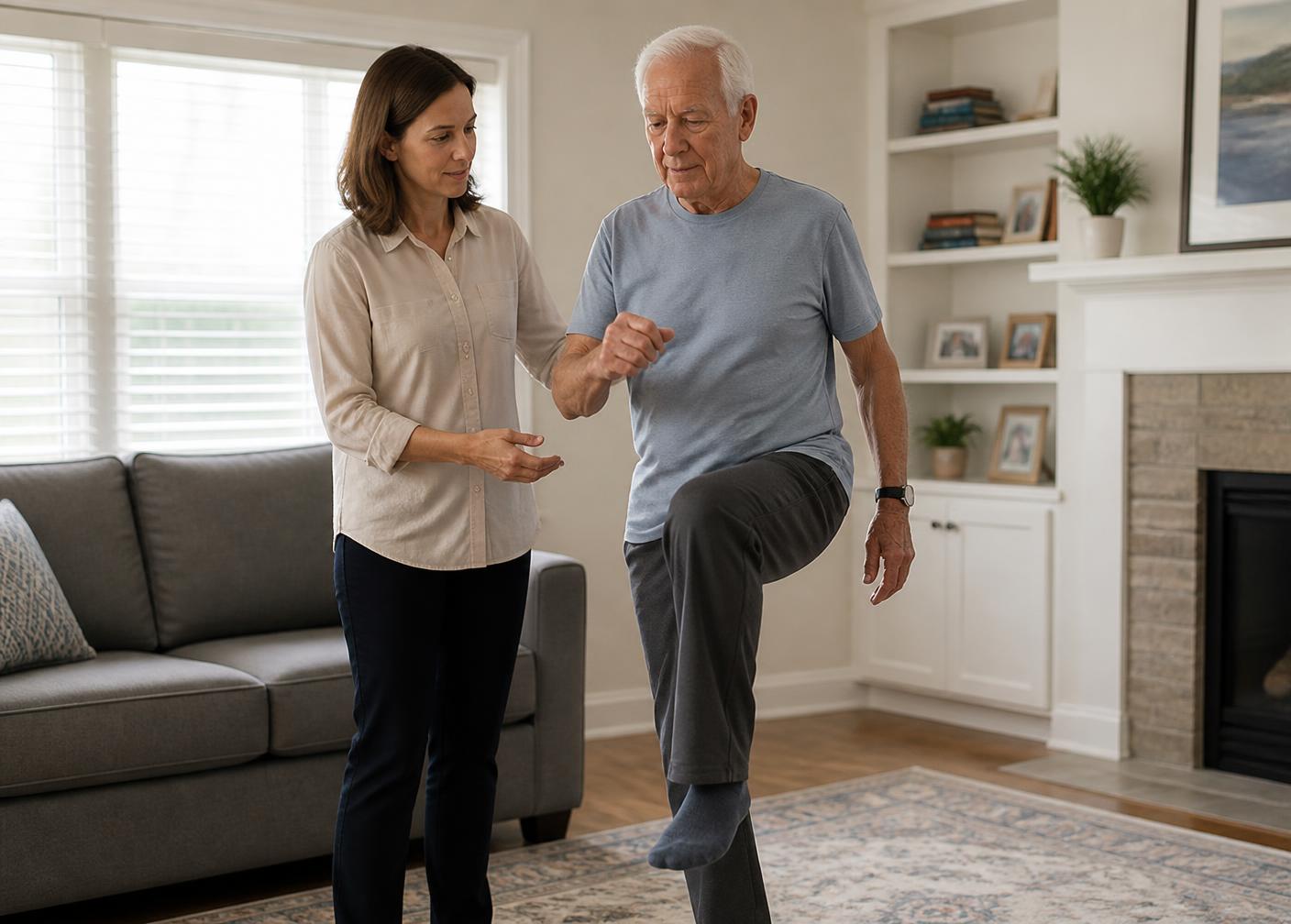
Who This Is For
Adults generally 65 and older who are living at home, in independent living, in assisted living, or in a similar setting — and who are noticing that movement has become harder, less steady, or less certain than it used to be.
It's just as often a family member who reaches out first. That's welcome. Adult children, spouses, friends and caregivers frequently see the earliest changes.
Common Functional Concerns We Address
- Balance that feels unsteady, or a sense of swaying and unsureness
- A fall, a near-fall, or growing fear of falling
- Weakness and deconditioning after illness, inactivity or a hospital stay
- Difficulty walking distances that used to be manageable
- Trouble with stairs, curbs and uneven ground
- Difficulty getting out of a chair, bed or car
- Pain that limits standing, walking or daily activities
- Recovery after an appropriate surgery
- Reduced confidence that has quietly shrunk daily activity
Why the Real Environment Changes the Care
In a clinic, we can measure strength and watch someone walk down a hallway. At home, we see the specific stair with the shallow tread, the bed that sits too low, the bathroom where there's nothing solid to hold, and the path from the bedroom to the kitchen at 2 a.m.
That context lets us practice the exact movements that matter and make recommendations that fit the actual home — not a general version of one.
What an Initial Evaluation Generally Includes
Every evaluation is individualized, but most cover the same ground.
- A conversation about what has changed, and what matters most to the person
- Review of relevant health history as it relates to movement and safety
- Assessment of strength, balance, walking and endurance
- Observation of real tasks: standing up, turning, stairs, entryways, bathroom use
- Review of any assistive devices already in use, and how they're actually being used
- A review of the plan with you — and, when appropriate, your family — so care decisions are made collaboratively and everyone understands the next steps
How We Help
- Improve strength and mobility
- Improve balance and reduce fall risk
- Restore function after hospitalization, illness, or surgery
- Make walking and transfers safer
- Improve confidence with stairs and daily activities
- Address pain that limits movement and independence
- Recommend equipment or home modifications when appropriate
Physical therapy is individualized and results vary from person to person. We won't promise a specific outcome — we'll be clear about what we see and what we recommend.
Where Care Takes Place
- Private homes
- Independent living communities
- Assisted living communities
- Other appropriate community settings
Family Involvement
Family members are welcome to be present, ask questions, and understand what's being worked on and why. When someone lives alone, we can talk through what family at a distance should watch for — always with the person's knowledge and consent.
Decisions belong to the person receiving care. Our role is to make sure everyone understands the options.
Insurance & Coverage
We work with Medicare and select Medicare insurance plans. Contact us and we'll verify your coverage before treatment begins.
Wondering whether physical therapy or a home safety assessment is the better starting point? That's exactly what a discovery call is for.
Ready to Talk Through What's Changed?
Tell us a little about the situation and we'll arrange a short discovery call at a time that works for you.