
Home Safety & Aging-in-Place Assessment
Can Mom or Dad Continue Navigating This Home Safely as Their Needs Change?
A thorough, unhurried in-home assessment that answers that question honestly — and leaves the family with a written, prioritized plan instead of a vague worry.
What the Assessment Involves
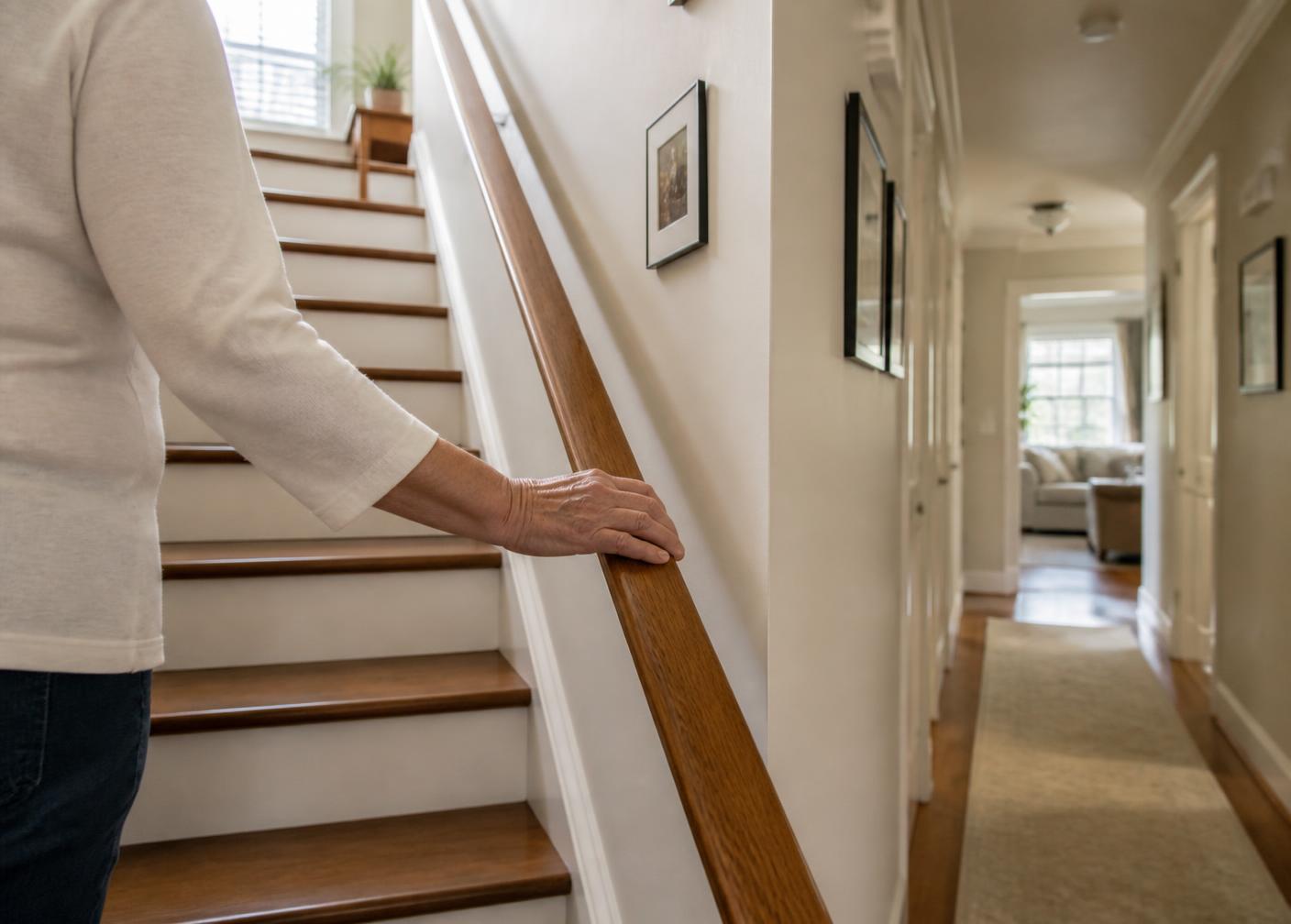
A 60–90 minute visit in the home, walking through it the way it's actually lived in. We watch real movement in real rooms, ask about daily routines, and note where the environment is working — and where it isn't.
Mobility and fall risk
- Balance and steadiness
- Walking pattern and endurance
- Fall history and near-falls
Everyday transfers
- Chair, bed and toilet
- Getting in and out of the shower or tub
- Car transfers
Stairs and entrances
- Interior and exterior stairs
- Handrails and lighting
- Thresholds and doorways
Room-by-room review
- Bathroom
- Bedroom
- Living areas and hallways
- Kitchen pathways
Devices and equipment
- Canes, walkers and other devices already in use
- Fit, condition and how they're actually used
- Equipment that may be worth considering
Environmental hazards
- Flooring, rugs and cords
- Lighting and night pathways
- Clutter and reach patterns
The Written Home Safety Action Plan
After the visit, you receive a written plan organized by priority, so the family knows what to handle first instead of trying to do everything at once. Where it's helpful, the plan includes specific product recommendations and links.
Urgent
Issues worth addressing right away because of immediate risk.
Recommended
Meaningful improvements to plan for in the near term.
Optional
Helpful refinements to consider as needs change over time.
Caregiver Consultation
Time is set aside to talk with family or caregivers about what was observed, what it means day to day, and which changes tend to make the biggest difference. Questions are expected — this is usually the most useful part of the visit for families.
Brief Follow-Up
A short follow-up afterward gives everyone a chance to ask about anything in the plan, confirm that changes were understood, and clarify next steps.
How This Differs From Physical Therapy
This assessment is a private-pay consultative service focused on the home environment and aging-in-place planning. It is not billed to insurance and is not the same as insurance-covered physical therapy, which is a distinct clinical service with its own evaluation and plan of care.
We keep the two separate on purpose. If therapy is what's needed, we'll say so and explain how mobile physical therapy works. We won't reframe this assessment as therapy in order to bill it.
Start With a Conversation About the Home
Tell us a little about the situation and we'll arrange a short discovery call to talk through whether an assessment makes sense.